



Quick Answer: Cabin fire insurance Arizona protects mountain and rural properties against wildfire damage through specialized dwelling fire or homeowners policies. Standard carriers often decline high-risk wildfire zones, but independent brokers access surplus lines and specialty markets. Expect higher premiums based on your FireLine score, defensible space, roof materials, and proximity to fire response services.
Owning a cabin in Arizona’s pine-covered mountains or remote desert landscapes offers an escape from Phoenix metro heat. However, that same isolation creates significant wildfire exposure that complicates insurance coverage. Arizona experienced over 1,800 wildfires in 2023 alone, according to National Interagency Fire Center data, making proper cabin fire insurance arizona essential for any recreational or seasonal property owner.
This guide explains how wildfire risk affects your coverage options, what FireLine scores mean for premiums, and how working with Arizona insurance professionals who access multiple carriers can help you find protection when standard markets say no.
Why Arizona Cabins Face Unique Fire Insurance Challenges
Mountain cabins near Flagstaff, Payson, Prescott, Pinetop-Lakeside, and Show Low sit within Arizona’s most fire-prone ecosystems. Unlike valley homes in Phoenix or Chandler, these properties face coverage obstacles that standard homeowners policies weren’t designed to address.
Distance from Fire Response
Insurance underwriters measure response time from the nearest fire station. Cabins more than five miles from a staffed station—or those relying on volunteer departments—face higher premiums or outright declinations. Many Arizona mountain communities depend on seasonal or part-time fire crews, which carriers view as higher risk.
Water Supply Limitations
Properties without fire hydrants within 1,000 feet typically require alternative water sources. Underwriters want to see at least 2,500 gallons of accessible water for firefighting. Cisterns, ponds, or community water systems can satisfy this requirement, but documentation matters during the application process.
Vegetation and Terrain
Ponderosa pine forests, juniper woodlands, and chaparral create ladder fuels that allow ground fires to climb into tree canopies. Steep slopes accelerate fire spread and complicate suppression efforts. Both factors significantly influence your property’s risk rating.
Understanding FireLine Scores for Cabin Insurance
Most insurance carriers use FireLine scores—developed by Verisk Analytics—to assess wildfire risk at specific addresses. Understanding your score helps you anticipate coverage availability and pricing. Our detailed resource on navigating FireLine scores for wildfire and cabin insurance explains this system thoroughly.
FireLine ScoreRisk LevelTypical Insurance Impact1-3Low to ModerateStandard market availability, competitive rates4-6Moderate to HighLimited standard options, some surcharges7-10High to ExtremeSurplus lines or specialty markets often required
Scores above 5 increasingly push cabin owners toward non-standard markets. However, mitigation efforts can sometimes reduce your effective score and reopen standard carrier options.
Types of Coverage for Arizona Cabins
Not every cabin needs the same policy structure. Your usage pattern, construction details, and mortgage requirements determine which coverage type fits best.
Dwelling Fire Insurance
The differences between dwelling fire insurance and homeowners insurance matter for cabin owners. Dwelling fire policies, also called DP-3 policies, cover the structure and basic liability without extensive personal property protection. They work well for seasonal-use cabins where you don’t store significant belongings.
Dwelling fire policies often have fewer eligibility restrictions than full homeowners coverage, making them accessible for properties that standard HO-3 policies won’t touch.
Homeowners Insurance (HO-3)
If your cabin serves as a second home with regular occupancy, you may want comprehensive homeowners coverage including:
- Dwelling coverage for structure damage
- Personal property protection for contents
- Additional living expenses if fire displaces you
- Liability coverage for guest injuries
Our basic home insurance guide for Arizona covers these components in detail.
Specialty High-Risk Policies
When standard and even surplus lines decline coverage, specialty high-risk markets exist specifically for wildfire-zone properties. These policies may have higher deductibles, actual cash value rather than replacement cost coverage, or limited additional coverages—but they provide essential protection when alternatives don’t exist.
Arizona’s FAIR Plan—the insurer of last resort—accepts applications when no other market will write coverage. However, FAIR Plan policies typically offer basic fire coverage only, requiring separate policies for other perils.
Factors Affecting Your Cabin Insurance Premium
Understanding what drives cabin fire insurance costs helps you make strategic decisions about property improvements and coverage selection.
Roof Construction Materials
Class A fire-rated roofing—metal, tile, or composition shingles meeting ASTM standards—significantly reduces premiums compared to wood shake or shingle roofs. Some carriers won’t insure properties with wood roofs in high-risk zones regardless of other factors. Our guide to roof insurance essentials explains how roofing choices affect coverage.
Upgrading to Class A fire-rated materials like metal or tile is one of the most effective ways to lower cabin insurance premiums.
Defensible Space
Creating and documenting defensible space demonstrates risk reduction to underwriters. The U.S. Forest Service recommends Zone 1 (0-30 feet from structures) with minimal combustible vegetation and Zone 2 (30-100 feet) with reduced fuels and increased spacing between trees.
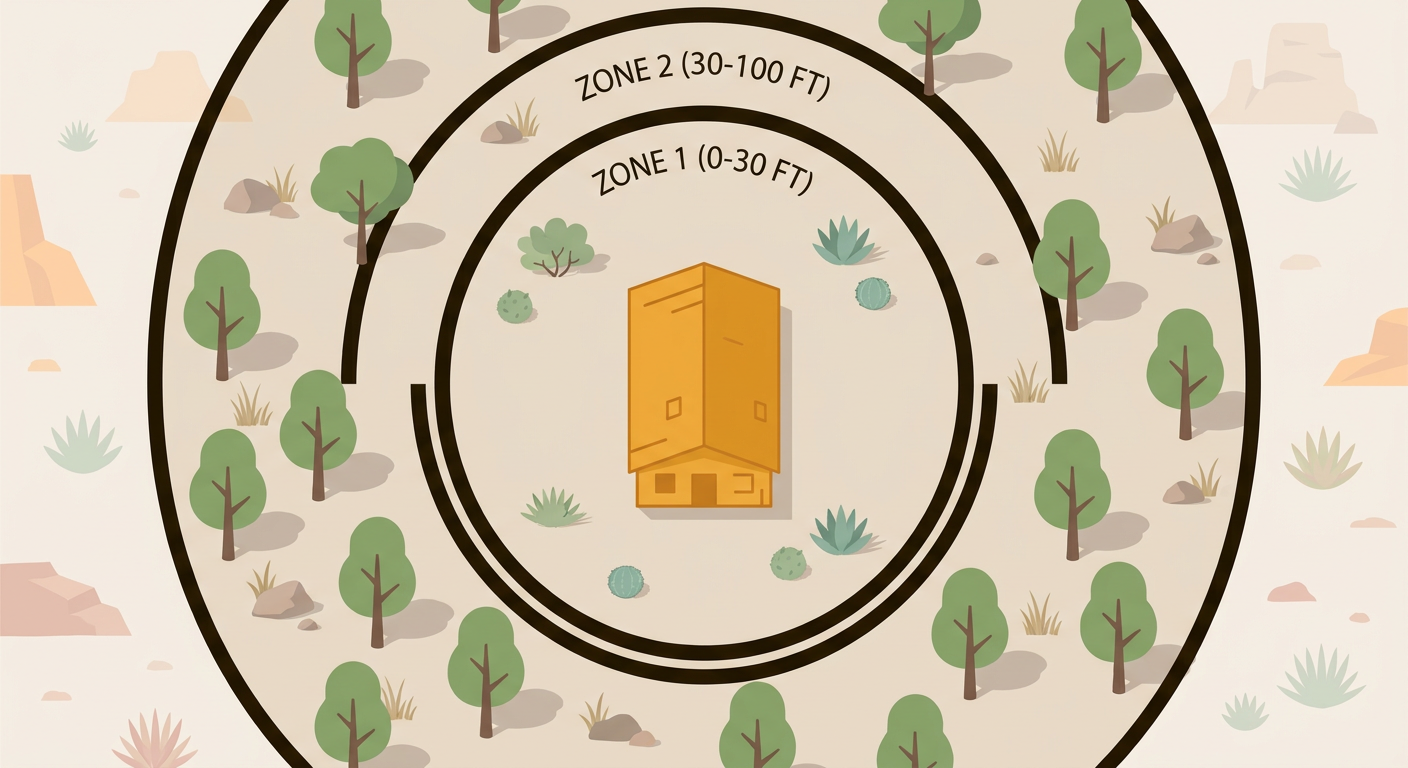
Properly maintained defensible space zones are critical for securing coverage in high-risk wildfire areas.
Property Age and Electrical Systems
Older cabins with outdated electrical wiring, wood-burning stoves, or original heating systems face underwriting scrutiny. Updated electrical panels, modern HVAC, and documented maintenance records improve your application. Many considerations from insuring older homes apply to aging cabin structures.
Access Road Conditions
Fire apparatus must reach your property. Narrow roads, steep grades, or locked gates that could delay response affect underwriting decisions. Some carriers require minimum road widths and turnaround areas for emergency vehicles.
Need coverage for your Arizona mountain cabin? Independent Insurance Brokers Arizona works with 40+ carriers including specialty markets for high-risk wildfire properties. Request your cabin insurance quote to explore your options.
Wildfire Mitigation Discounts You Should Know About
Proactive property hardening can earn meaningful premium reductions while genuinely protecting your cabin.
Firewise USA Recognition
Communities earning Firewise USA certification through the National Fire Protection Association demonstrate organized wildfire risk reduction. Some carriers offer discounts ranging from 5% to 15% for properties within Firewise communities. Several Arizona mountain towns have achieved this designation.
Individual Property Improvements
Carriers may reduce premiums for documented improvements including:
- Metal or Class A roofing installation
- Enclosed eaves and vents with ember-resistant screens
- Non-combustible siding or fire-resistant cladding
- Interior sprinkler systems
- On-site water storage with fire department connections
Documentation matters—before-and-after photos, contractor invoices, and inspection reports help substantiate discount requests during policy renewal.
Defensible Space Inspections
Some counties offer free defensible space inspections that provide documentation useful for insurance applications. The inspection report demonstrates your commitment to risk reduction and gives underwriters confidence in your property’s improved fire resistance.
What Happens When Standard Carriers Decline Coverage
Receiving a non-renewal notice or declination letter feels alarming, but options exist beyond the standard market. Understanding high-risk home insurance in Arizona prepares you for this situation.
Surplus Lines Markets
Surplus lines carriers specialize in risks that standard admitted carriers won’t accept. These insurers aren’t backed by state guaranty funds, but they’re regulated and must maintain financial stability requirements. Lloyd’s of London syndicates and domestic surplus lines carriers like Lexington and Scottsdale Insurance Company write significant wildfire-exposed business.
Specialty Admitted Carriers
Some admitted carriers focus specifically on wildfire-zone properties. Companies like CalFair (which operates beyond California), Foremost, and American Modern maintain appetites for rural and seasonal properties that mainstream carriers avoid.
Arizona FAIR Plan
As the insurer of last resort, the Arizona FAIR Plan writes basic fire coverage when no other option exists. The application requires documentation of prior declinations from the voluntary market. FAIR Plan policies typically cost more and cover less than standard policies, but they provide essential protection.
Coverage Gaps to Watch For
High-risk property policies sometimes include limitations that standard homeowners coverage doesn’t. Review your policy carefully for these potential gaps.
Actual Cash Value vs. Replacement Cost
Some wildfire-zone policies pay claims based on actual cash value (depreciated value) rather than replacement cost (rebuilding cost). This difference can leave significant gaps after a total loss. If your policy includes ACV coverage, understand what depreciation means for your particular structure.
Ordinance or Law Coverage
After a wildfire destroys your cabin, rebuilding may require compliance with current building codes that didn’t exist when the original structure was built. Standard coverage limits may not include the cost of code upgrades. Ordinance or law coverage addresses this gap—verify whether your policy includes it.
Debris Removal Limitations
Wildfire debris removal costs can reach significant amounts, especially when burned structures contain hazardous materials. Some policies cap debris removal at percentages of dwelling coverage that prove inadequate. Additional debris removal coverage provides important protection.
Extended Replacement Cost
After widespread wildfires, construction costs spike due to contractor demand and material shortages. Extended replacement cost coverage (typically 125% to 150% of dwelling limits) helps bridge the gap between your policy limit and actual rebuilding costs in a post-disaster market.
How Rental Use Affects Cabin Fire Insurance
Many Arizona cabin owners offset ownership costs by renting their property when not in use. However, rental activity significantly changes your insurance needs.
Standard homeowners and dwelling fire policies exclude or limit coverage during rental periods. Short-term rentals through platforms like VRBO or Airbnb require specialized coverage that addresses:
- Liability exposure from paying guests
- Property damage by renters
- Business income if fire closes your rental
- Additional living expenses for displaced renters
Our guides on Arizona VRBO rental insurance and vacation rental insurance explain coverage options. Understanding why short-term rentals need specialized insurance helps you avoid dangerous coverage gaps.
Seasonal and Vacancy Considerations
Most cabin owners don’t occupy their properties year-round. Extended vacancy creates insurance complications you need to address proactively.
Standard Vacancy Clauses
Most policies reduce or eliminate coverage after 30-60 consecutive days of vacancy. During wildfire season, an unoccupied cabin can’t benefit from early fire detection or immediate protective action. Carriers view extended vacancy as increased risk.
Vacancy Permits and Endorsements
If you’ll be away for extended periods, request a vacancy permit or endorsement in advance. This documentation preserves your coverage during absence. Some carriers offer seasonal dwelling policies specifically designed for properties with predictable occupancy patterns.
Monitoring and Maintenance
Carriers may require or incentivize property monitoring during vacancy. Options include:
- Property management check-ins
- Smart home monitoring for smoke, water, and temperature
- Security cameras with remote access
- Neighbor agreements for regular exterior checks
Documenting your monitoring arrangements strengthens your underwriting profile and may reduce premiums.
Working With an Independent Broker for High-Risk Properties
Cabin fire insurance Arizona presents challenges that single-carrier agents simply can’t solve. When your property falls outside standard market appetites, independent brokers offer essential advantages. Learning whether getting insurance through a broker is worth it helps you understand this value.
Access to Multiple Markets
Independent Insurance Brokers Arizona works with over 40 carriers including standard admitted companies, surplus lines markets, and specialty insurers. This breadth means we can often find coverage when your current carrier non-renews or when standard markets decline.
Understanding of Underwriting Requirements
We know what documentation different carriers need and how to present your property’s risk-reducing features effectively. A complete application with defensible space photos, mitigation records, and water supply documentation moves through underwriting more smoothly than incomplete submissions.
Ongoing Advocacy
Insurance markets constantly adjust their wildfire appetites. What one carrier declined last year, another may accept today. We monitor market changes and proactively seek better options for clients whose current coverage doesn’t meet their needs.
Discover how Arizona independent insurance brokers provide protection for properties that challenge standard insurance approaches.
Steps to Take Before Fire Season
Protecting your Arizona cabin requires year-round attention, but pre-fire-season preparation proves especially important.
Review Your Policy Annually
Verify your dwelling coverage reflects current rebuilding costs. Construction expenses increase annually, and post-fire demand surges inflate costs further. Many cabin owners are underinsured without realizing it.
Document Your Property
Create video and photo documentation of your cabin’s exterior, interior, and contents. Store this documentation off-site in cloud storage or with a trusted contact. This inventory proves invaluable for claims processing after a loss.
Complete Mitigation Projects
Clear defensible space, clean gutters, remove dead vegetation, and address any deferred maintenance before fire season begins. Document your work with dated photographs that demonstrate ongoing property stewardship.
Verify Water Access
Confirm your water storage is full, pumps function, and fire department connections work properly. If your property relies on shared water resources, verify community maintenance is current.
What to Do After a Wildfire Threatens Your Cabin
If wildfire threatens or damages your property, specific steps protect both your safety and your insurance claim.
Prioritize Safety
Never return to your property until authorities confirm it’s safe. Even after visible flames pass, hazards including hot spots, unstable structures, and air quality dangers persist.
Document Everything
Once safe to return, photograph all damage before any cleanup or repairs begin. This documentation supports your insurance claim and helps adjusters assess the loss accurately.
Contact Your Insurance Immediately
Report the claim as soon as possible. Most policies require prompt notification, and early reporting positions you ahead of other claimants competing for adjuster attention during widespread fire events.
Protect Against Further Damage
Take reasonable steps to prevent additional damage—covering roof openings, boarding broken windows, and similar protective measures. Keep receipts for emergency expenses, which your policy may reimburse.
Understanding whether rates increase after a claim helps you make informed decisions about the claims process.
Protect your Arizona cabin investment. Independent Insurance Brokers Arizona specializes in finding coverage for high-risk wildfire properties. Contact our team at (602) 264-0566 to discuss your cabin’s specific situation and coverage options.
Additional Protection Layers
Beyond basic fire coverage, consider supplemental protections that address gaps in standard policies.
Umbrella Insurance
If your cabin hosts guests—whether family, friends, or renters—liability exposure extends beyond what standard policies provide. Our umbrella insurance guide explains how this coverage protects your assets when underlying limits prove inadequate.
Scheduled Personal Property
Valuable items at your cabin—artwork, antiques, equipment, or collections—may exceed standard personal property sublimits. Scheduled coverage provides specific protection for these items.
Equipment Breakdown Coverage
Cabins often rely on well pumps, generators, and HVAC systems that standard policies don’t cover for mechanical failure. Equipment breakdown coverage fills this gap.
Frequently Asked Questions
Can I get fire insurance for a cabin with a high FireLine score?
Yes, though options become more limited as scores increase. Scores above 7 typically require surplus lines or specialty markets rather than standard admitted carriers. Independent brokers access these markets and can often find coverage when direct carriers decline. Premium costs will be higher than low-risk properties, and policies may include higher deductibles or coverage limitations.
What wildfire mitigation improvements provide the biggest insurance discounts?
Class A fire-rated roofing typically provides the most significant discount, followed by documented defensible space of 100+ feet. Enclosed or screened vents that prevent ember intrusion, non-combustible siding, and on-site water storage also earn meaningful premium reductions. Firewise USA community membership can add another 5-15% discount with participating carriers.
Does my standard homeowners policy cover my Arizona cabin?
Usually not. Second properties require separate policies, and standard homeowners coverage for primary residences doesn’t extend to additional properties. Furthermore, standard carriers often decline cabin coverage in wildfire-prone areas. You’ll likely need a dwelling fire policy or specialty homeowners coverage designed for high-risk or seasonal properties.
How does renting my cabin affect fire insurance coverage?
Rental activity changes your insurance needs significantly. Standard homeowners and dwelling fire policies typically exclude or limit coverage during rental periods. Short-term rentals require specialized vacation rental or landlord policies that address liability exposure from guests, renter-caused damage, and business income loss. Failing to disclose rental activity can void your coverage.
What happens if I can’t find any carrier willing to insure my wildfire-zone cabin?
Arizona’s FAIR Plan serves as the insurer of last resort when no voluntary market will provide coverage. You must document declinations from other carriers to qualify. FAIR Plan policies provide basic fire coverage only—they’re more expensive and offer less comprehensive protection than standard policies, but they ensure you can maintain essential coverage when no alternatives exist.